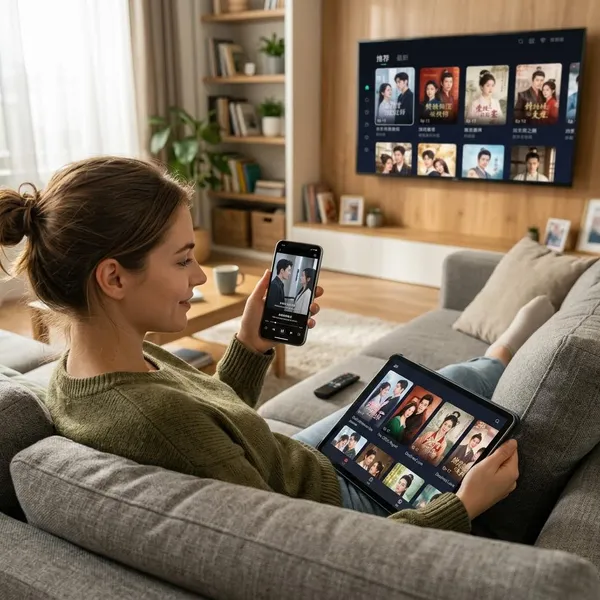
If you keep seeing one-minute melodramas in portrait video and wondering why they suddenly look more polished, that is the rise of hollywood vertical drama. It is scripted entertainment made for phones first: short episodes, big emotional turns, and a business model built around app viewing rather than traditional TV scheduling.
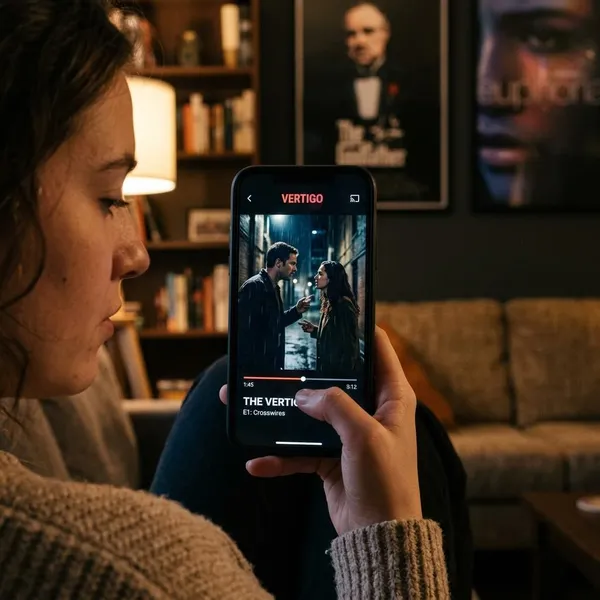
What is a Hollywood vertical drama?
A Hollywood vertical drama is a scripted series filmed in a vertical 9:16 format and released as very short serialized episodes. The point is not simply that the video is upright. The whole viewing experience is designed for someone holding a phone, watching in small gaps, and deciding quickly whether to continue.
Mobile-first 9:16 storytelling
The 9:16 frame changes the storytelling. Faces, reactions, and close personal conflict matter more than wide scenery or complex blocking. A shocked expression, a ring on a finger, or a villain stepping into frame has to read instantly on a small screen.
That is why the better vertical dramas do not feel like cropped TV. They use tight framing on purpose. A confrontation in an office doorway or a tense conversation in a car can work well because the phone screen keeps the emotion close.
Short serialized episodes
Episodes are usually around one minute, sometimes a little longer. The short runtime does not mean the story is tiny; many seasons stretch across dozens of episodes, so the full arc can still feel substantial.
Why is Hollywood turning to vertical drama?
Hollywood is paying attention because vertical drama solves a problem traditional entertainment companies keep running into: many people now discover and consume video on phones before they ever open a streaming app. The format is cheaper to test, faster to produce, and easier to measure than a standard scripted series.
Growing mobile audiences
Mobile audiences are the obvious driver. People already watch TikTok, YouTube Shorts, Instagram Reels, and app-based video in portrait mode, so vertical drama meets them in the habit they already have.
Faster, lower-cost production
Vertical dramas can often be produced on shorter schedules and smaller budgets than conventional TV. That lowers the risk of testing a familiar trope such as contract marriage, hidden identity, or billionaire romance.
The tradeoff is important: speed can expose weak writing, flat performances, and repetitive locations. The format works best when producers treat the limits as creative rules, not as an excuse to make something careless.
New revenue models
The money model is one of the biggest reasons the format keeps growing. Many apps let viewers start free, then unlock later episodes through ads, coins, daily rewards, or subscriptions.
- For casual viewers: free episodes make sampling easy.
- For heavy viewers: subscriptions or coin bundles can become tempting once several shows are in rotation.
- For platforms: cliffhangers create natural moments where viewers may accept an ad or payment prompt.
How did vertical drama reach Hollywood?
Vertical drama reached Hollywood after the format proved it could attract large mobile audiences elsewhere, especially in China's microdrama market. Once companies saw that short portrait dramas could generate repeat viewing and payment behavior, English-language production became a logical next step.
China's microdrama boom
China's microdrama boom helped define the modern format: very short episodes, dramatic hooks within seconds, and heavy use of romance, revenge, status, family conflict, and shocking reveals. It showed that audiences would follow serialized stories on phones and, in many cases, pay to keep going.
That origin also explains why the business side feels closer to mobile gaming or serialized reading apps than to broadcast TV. The app experience, payment design, and episode structure are part of the product.
Global app expansion
Apps such as ReelShort and DramaBox helped move vertical drama into international markets. They did more than host videos; they built catalogs, recommendation flows, unlock systems, and social ad campaigns around the format.
U.S. production growth
U.S. production grew because local stories tend to perform better when they sound and feel culturally familiar. Accents, workplace settings, relationship dynamics, and social cues all affect whether a viewer believes the world quickly enough to keep watching.
This has also created work for actors, directors, editors, writers, and small crews. The pace can be intense, but the volume of production gives the format real importance inside the wider entertainment labor market.
Hollywood studio and creator interest
Hollywood interest is partly defensive and partly experimental. Studios do not want to lose mobile attention entirely to social feeds, and creators see a fast way to test stories that might take much longer to develop for traditional TV.
- Low-risk testing: a trope can be tried quickly before bigger investment.
- Talent discovery: newer performers and directors can build practical credits.
- Audience signals: completion rates and unlock behavior show what viewers actually finish.
How are Hollywood vertical dramas made?
Hollywood vertical dramas are made around one practical question: will this moment land clearly on a phone within a few seconds? That affects writing, casting, framing, locations, editing, music, and even how actors deliver reactions.
Portrait-first framing
Portrait-first framing puts emotional information in the center of the phone screen. Directors often favor close-ups, two-person confrontations, and simple background details that do not distract from the main beat.
Short production schedules
Many vertical dramas are produced quickly, sometimes with shoots lasting only days rather than months. Scripts are built to avoid too many locations, complicated stunts, or scenes that need long setup time.
This speed helps platforms react to audience demand, but it can also create sameness. The stronger productions usually have one clean central hook and avoid stuffing too many twists into every minute.
Lean crews and fast editing
Lean crews keep the process flexible. Fast editing keeps the viewer oriented and prevents scenes from sitting too long without a new emotional turn.
Captions, music cues, and reaction shots often carry more weight than they would in a traditional drama. That can feel heavy-handed, but it helps when someone is watching with low volume, interruptions, or a small screen.
Hook-heavy scripts
Hook-heavy scripts are the engine of the format. Writers use familiar setups because they save time: secret heirs, contract marriages, revenge plots, mistaken identity, forbidden attraction, and sudden status reversals.
- Secret identity: creates instant curiosity about what will be exposed.
- Contract marriage: gives romance and conflict a built-in reason to collide.
- Revenge plot: makes the viewer wait for payback, not just resolution.

Why do vertical dramas work so well on mobile?
Vertical dramas work on mobile because they respect the reality of phone viewing: people are distracted, time is fragmented, and the next app is one tap away. The format gives viewers a clear reason to start and an even clearer reason to continue.
That is also why judging them only by traditional TV standards can miss the point. They are not trying to create the same kind of viewing experience. They are built for quick emotional momentum.
Fast emotional payoff
The emotional payoff arrives quickly. A viewer may see rejection, humiliation, desire, jealousy, or danger in the opening seconds. That speed is what stops the scroll.
Frequent cliffhangers
Cliffhangers turn each short episode into an unfinished question. Who walked in? Will the secret be exposed? Did the contract marriage become real? That small unresolved beat makes tapping next feel effortless.
This is also where viewers should be careful. If you dislike being nudged into ads or coin purchases, stop before the paywall rhythm takes over. The format is intentionally designed to make "just one more" feel harmless.
Familiar high-stakes tropes
Familiar tropes make the story instantly readable. A ruthless CEO, a betrayed wife, a hidden child, or a jealous rival tells the viewer what kind of emotional game they are entering without a long setup.
That does not mean every story is identical. The appeal often comes from watching how a known pattern escalates: who gets exposed first, who switches sides, and how far the revenge or romance goes.
Easy on-the-go viewing
On-the-go viewing is where the format has a real advantage. A commuter can watch several episodes while standing. Someone waiting for takeout can finish a mini-arc without committing to a full show. A viewer who only wants background entertainment can still follow the broad conflict.
It is less suited to moments when you want depth, silence, or a polished long-form experience. Vertical drama works best as snackable serialized entertainment, not as a full substitute for every kind of screen time.
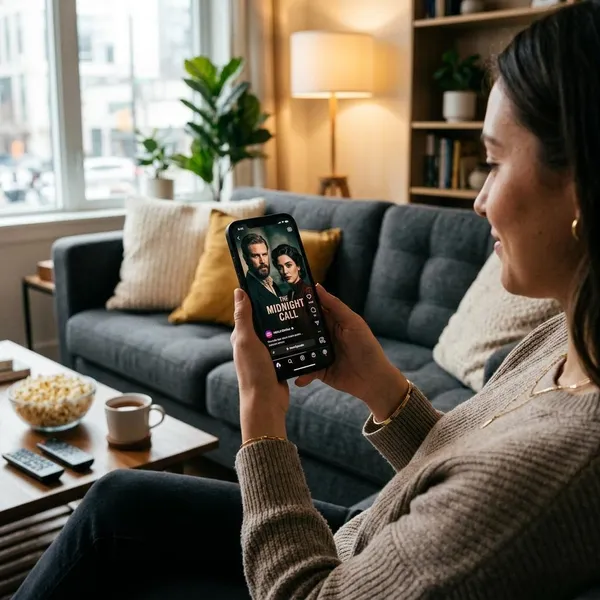
Where can you watch Hollywood vertical dramas?
You can watch Hollywood vertical dramas mainly on dedicated microdrama apps, with TikTok and YouTube acting more as discovery channels. If you are choosing where to start, check three things first: how many free episodes you get, how unlocking works, and whether the catalog matches the kind of stories you actually like.
Romance and melodrama dominate many services, but the mix is changing. Some viewers will care most about price; others will care more about acting quality, subtitles, app design, or whether episodes can be unlocked without constant payments.
ReelShort
ReelShort is one of the most recognized names in English-language vertical drama. It is a sensible first stop if you want to understand the mainstream version of the format: romance-heavy stories, dramatic social clips, and fast app-based episode unlocking.
Before spending money, try a few free chapters from more than one title. Acting style, pacing, and translation polish can vary, even inside the same app.
DramaBox
DramaBox is another major app in the space, often appealing to viewers who want a large catalog of fast serialized stories. It uses the same broad mobile-first logic but may differ in pricing, interface, promotions, and title availability.
TikTok
TikTok is usually where people discover vertical dramas, not where they watch complete seasons. The clips are designed to show the loudest moment: a slap, reveal, confession, or revenge setup.
Treat TikTok clips like trailers. They can tell you the hook, but they may not show whether the full series has enough story to justify downloading an app or paying to continue.
YouTube
YouTube can be useful for trailers, Shorts, sample episodes, commentary, and title searches. It is especially helpful if you saw a scene elsewhere and want to identify the show before installing anything.
Full access varies by title and platform, so YouTube is best used as a preview and search tool unless the producer has officially uploaded longer cuts or complete episodes.
Conclusion
Hollywood vertical drama is growing because it fits a specific viewing moment extremely well: quick, emotional, phone-first storytelling for people who may not want a full TV episode right now. It is worth trying if you enjoy melodrama, cliffhangers, and low-commitment episodes, but it is not the best choice if you dislike paywall prompts or want slow, cinematic storytelling. The smartest way in is simple: sample for free, compare apps, and only pay when a show is genuinely keeping your attention.