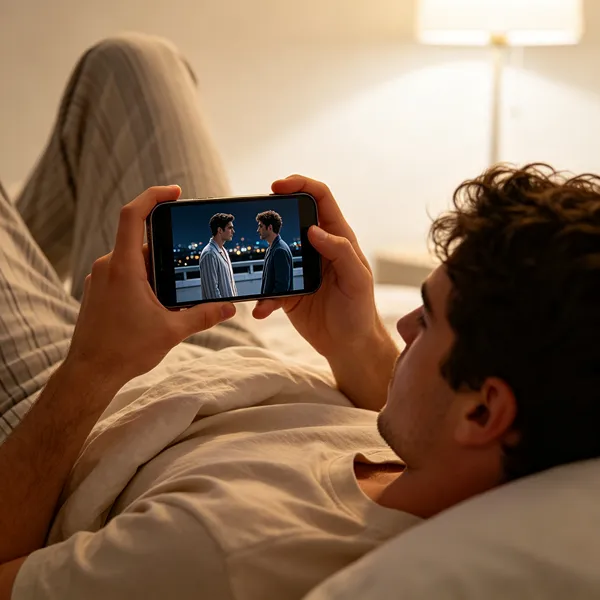
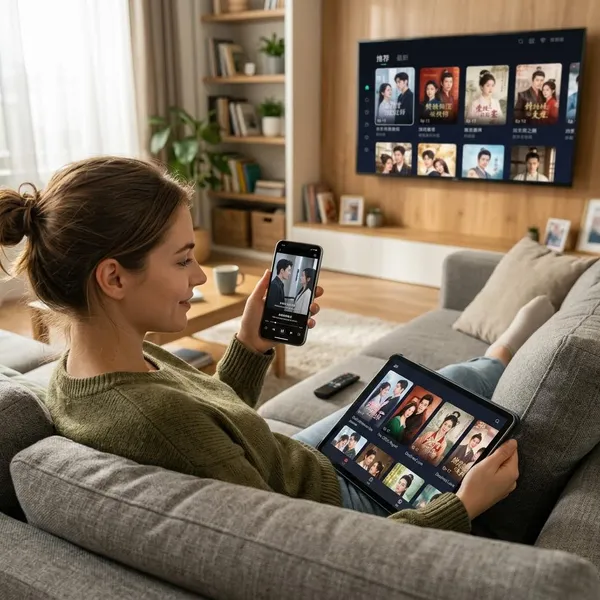
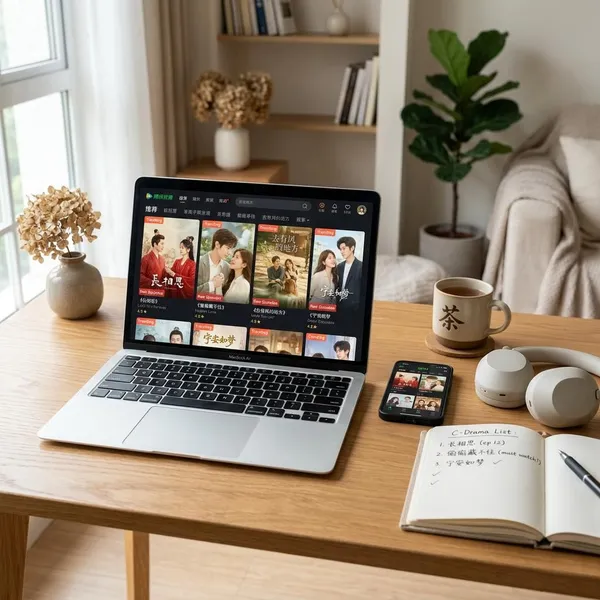
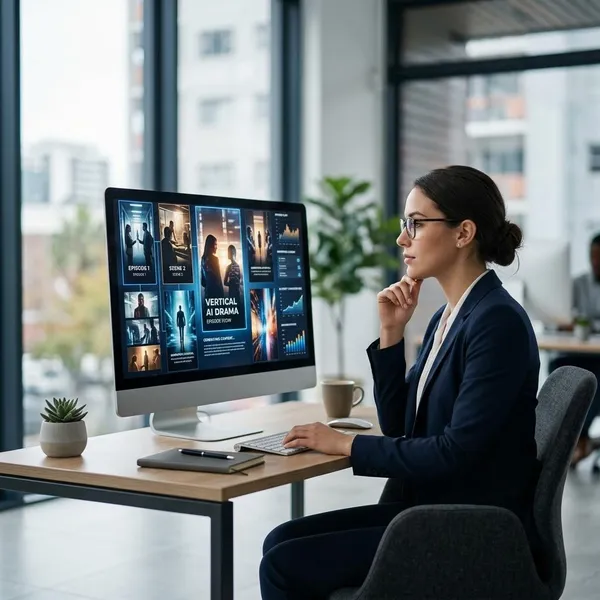
If you are trying to understand AI vertical drama, the quickest answer is this: it is a phone-first short drama format where AI helps create some or all of the visuals, voices, characters, or production assets. It can be a useful shortcut for fantasy-heavy stories, fast pilots, and low-budget testing, but it still needs strong writing, clean editing, and careful continuity to feel watchable.
What Is AI Vertical Drama?
AI vertical drama combines two things: short serialized drama made for vertical phone screens, and production support from AI tools. The result is usually a fast-moving 9:16 series with emotional hooks, cliffhangers, and episodes short enough to watch during a break or while scrolling at night.
AI generated or AI assisted vertical series
Not every AI vertical series is fully generated. A useful split is simple: AI-generated usually means the main visuals or characters are synthetic, while AI-assisted means humans still shoot, write, act, or edit, with AI helping specific parts of the workflow.
9:16 storytelling made for phones
The phone screen changes the storytelling. A vertical 9:16 frame favors faces, doorways, text messages, close confrontations, and quick reveals. Wide landscapes or complex group blocking are harder to read, so good vertical drama keeps the emotional action clear and centered.
How AI Vertical Dramas Are Made
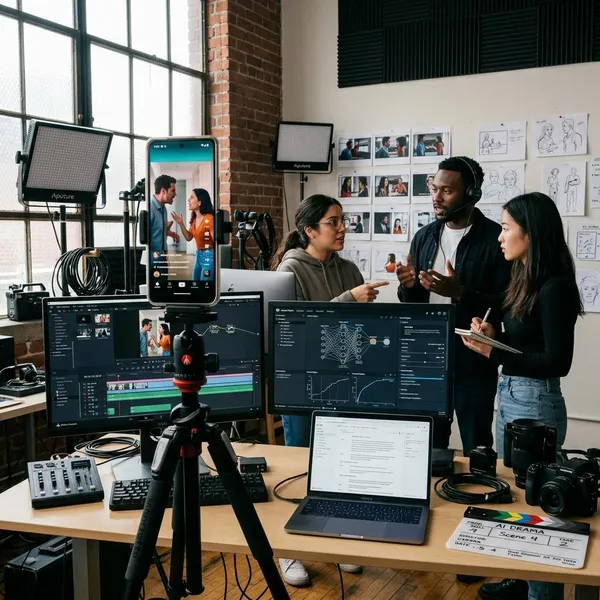
AI vertical dramas are not usually made by typing one prompt and publishing the result. The better workflow is closer to small-scale production: plan the story, lock the characters, generate scenes in controlled batches, add voices and sound, then check continuity before release.
Story and episode planning
Start with the hook before thinking about tools. A simple vertical concept works best when the audience understands the conflict immediately: a betrayed bride returns with power, a poor intern is secretly the heir, or a demon ruler recognizes his lost lover.
Character and world design
A strong character pack prevents one of the most obvious AI problems: drift. Before generating scenes, define the lead character's face, hair, clothing, age range, posture, and emotional style. Do the same for recurring locations such as a palace hall, hospital corridor, wedding venue, or neon city street.
Scene and video generation
Generation works best scene by scene. Prompts usually describe the character, action, camera framing, lighting, mood, setting, and vertical composition. Because the output is for phones, close-ups and simple blocking often perform better than wide, crowded scenes.
Voice dialogue and sound
Audio is often where an AI drama feels either watchable or cheap. A slightly imperfect visual can pass if the dialogue, timing, music, and sound effects support the emotion. A flat synthetic voice, however, can make even a beautiful scene feel fake.
Editing captions and continuity checks
Editing turns separate generated clips into an actual episode. Trim slow openings, keep captions readable, match voice timing to reactions, and make sure the final beat is strong enough to pull the viewer forward.
- Watch once for story: does the episode make sense without explanation?
- Watch once for continuity: check face, costume, props, and location details.
- Watch once on a phone: captions, expressions, and key actions must be clear on a small screen.
- Cut anything slow: short drama cannot afford dead air before the hook.
AI Vertical Drama vs Live Action Vertical Drama
The choice between AI and live action is really a choice between speed and human presence. AI is stronger for fast testing, lower-cost world building, and visual ideas that would be expensive to shoot. Live action is still stronger when chemistry, subtle acting, and real performer appeal are the reason people keep watching.
Production speed and cost
AI can reduce the need for locations, cast schedules, crew days, costumes, and physical sets. That makes it useful for creators testing several concepts or platforms trying to refresh a catalog quickly.
The trade-off is quality control. Faster production can also mean faster mistakes: mismatched shots, stiff movement, weak sound, or episodes that feel assembled rather than directed. Low cost helps only if the viewer can still follow and care about the story.
Character consistency
Character consistency is easier to promise than to deliver. A digital lead can theoretically appear in endless episodes, but only if references are controlled and every scene is reviewed. Without that discipline, the same character may quietly change jawline, age, hairstyle, or outfit from one moment to the next.
Acting and emotional realism
Live action still has the advantage in scenes built on shame, hesitation, desire, grief, or quiet tension. Vertical dramas use many close-ups, and close-ups expose weak performance quickly.
AI can work well for heightened emotions such as shock, rage, magical awe, or villain entrances. It is less reliable when the scene needs a tiny change in expression to reveal what a character is hiding.
Visual effects and world building
This is where AI has a real advantage. A cursed palace, celestial battlefield, haunted mansion, floating city, or futuristic royal court can be produced without building sets or hiring a large effects team.
Audience connection
Some viewers enjoy AI vertical dramas as quick, stylized entertainment and do not mind synthetic performers. Others connect more strongly when real actors bring chemistry, personality, and visible human effort to the screen.
Where AI Vertical Drama Works Best
AI vertical drama works best when the artificial look feels like part of the style rather than a production flaw. It is less convincing when a story depends on ordinary realism and tiny human reactions, and much more convincing when the world is heightened, symbolic, magical, or visually exaggerated.
Fantasy and supernatural stories
Fantasy is one of the safest matches because viewers already expect unreality. Magic, demons, ancient bloodlines, secret powers, spirit realms, and prophecy-driven plots can look natural in a stylized AI format.
Historical and stylized worlds
Period-style dramas often need costumes, palaces, streets, props, and large rooms that are expensive to film. AI can create a convincing impression of court politics or dynastic romance without a full physical production.
The strongest results usually avoid pretending to be documentary-real. Elegant lighting, theatrical staging, and consistent costume language can make the stylization feel intentional.
Animation and impossible settings
Animation-like projects, surreal spaces, and impossible settings are a natural fit because they do not need to pass as live action. Floating temples, dream courts, underwater cities, and symbolic inner worlds can be easier to accept when the visual language is clearly designed.
Pilot concepts and story testing
AI is especially useful when the goal is to test a story before spending more money. A small team can make three to five short episodes, watch where viewers drop off, and decide whether the idea deserves a larger AI, hybrid, or live-action version.
This is a sensible path for risky concepts. If the hook fails, the loss is limited. If viewers respond strongly, the creator has evidence before scaling the production.
How to Create an AI Vertical Drama
The smartest way to create an AI vertical drama is to make a small, controlled pilot before planning a full season. Prove the concept, the character look, the voice style, and the cliffhanger rhythm first. Scaling too early is the mistake that turns a promising idea into a messy batch of inconsistent clips.
Start with a simple vertical concept
Pick a premise that can be understood in one sentence and shown clearly on a phone screen. "A rejected bride returns as the company owner" is easier to execute than a ten-family political fantasy with five timelines.
For a beginner, choose one main relationship, one central conflict, and one repeatable location. Complexity can come later once the workflow is stable.
Build a show bible
A show bible does not need to be long, but it should act as the memory of the series. Include the premise, main characters, visual references, relationship map, world rules, recurring locations, tone, and episode arc.
- Character sheet: appearance, voice style, motivation, and emotional weakness.
- World rules: what can happen, what cannot, and what the audience must understand quickly.
- Visual rules: color, lighting, costume style, and repeated locations.
- Episode plan: the hook, turn, and cliffhanger for each short part.
Plan short episodes around cliffhangers
Each episode should move from setup to turn to hook without wandering. The ending does not always need a huge twist, but it should create a question: who walked in, what secret was exposed, why did the ring glow, or what will the lead do next?
Lock characters and visual references
Before generating many scenes, lock the main character references and reuse them consistently. This is more important than adding new locations or effects. Viewers may forgive a simple background, but they will notice when the heroine looks like a different person three episodes later.
Use the same discipline for voices. A character who sounds calm and mature in one scene should not suddenly sound like a different age or personality unless the story explains it.
Generate and edit scene by scene
Work in small batches: generate one scene, compare outputs, keep the strongest version, edit it into the episode, then move on. This makes problems easier to catch before they multiply.
- Generate the key shot first: the reveal, confrontation, kiss, attack, or cliffhanger.
- Add supporting shots: reactions, entrances, inserts, and location details.
- Cut for speed: remove pauses that do not build tension.
- Check on mobile: if the face, caption, or action is unclear, revise it.
Test a pilot before scaling
Release or share a small pilot batch before building a full season. For a solo creator, three short episodes are often enough to reveal whether the hook works, whether the voice feels believable, and whether character consistency holds up.
When reviewing feedback, separate story problems from production problems. If viewers understand the story but complain about the voice, fix the audio. If they praise the visuals but stop watching early, the pacing or premise may be the real issue.
Where to Watch AI Vertical Dramas
AI vertical dramas are still easier to find through mobile drama apps, experimental media platforms, and creator announcements than through one settled mainstream category. Labels can be inconsistent, so check the title description, platform notes, trailers, or creator posts if you specifically want AI-generated rather than standard vertical drama.
My Muse
My Muse is associated with short-form, mobile-first drama viewing, which makes it a relevant place to check for AI-assisted or AI-forward titles. Expect the experience to feel closer to quick serialized episodes than traditional TV browsing.
If you are mainly curious as a viewer, look for titles with stylized visuals, synthetic characters, or platform notes about AI production. Catalogs can change by region and release cycle.
Redrama
Redrama sits in the broader vertical microdrama space, where fast hooks, romance conflict, revenge plots, and genre packaging are common. That makes it a platform type where AI-supported production can fit naturally.
Quality may vary from title to title. Some AI-assisted dramas may feel polished enough for casual viewing, while others may show obvious voice, motion, or continuity issues.
Hollywood.AI
Hollywood.AI is linked with AI-driven media experimentation, so it is worth watching if you want projects that are more openly built around synthetic production. Platforms in this lane may be more likely to showcase digital actors, generated scenes, or AI-native storytelling formats.
Conclusion
AI vertical drama is most useful when it is treated as a focused storytelling tool, not a magic replacement for production skill. It can help creators test ideas, build stylized worlds, and produce phone-first episodes faster, but the work still needs a clear hook, consistent characters, readable captions, believable audio, and a reason to keep tapping. If the story depends mainly on human chemistry, live action or a hybrid approach is usually the safer choice.